Leaks under kitchen and bathroom sinks are some of the most common pipe leaks in any home. They are also easy to miss. A slow drip from a supply line, drain or garbage disposal lands on the cabinet floor, where it sits behind cleaning supplies until the bottom panel swells or a musty smell starts.
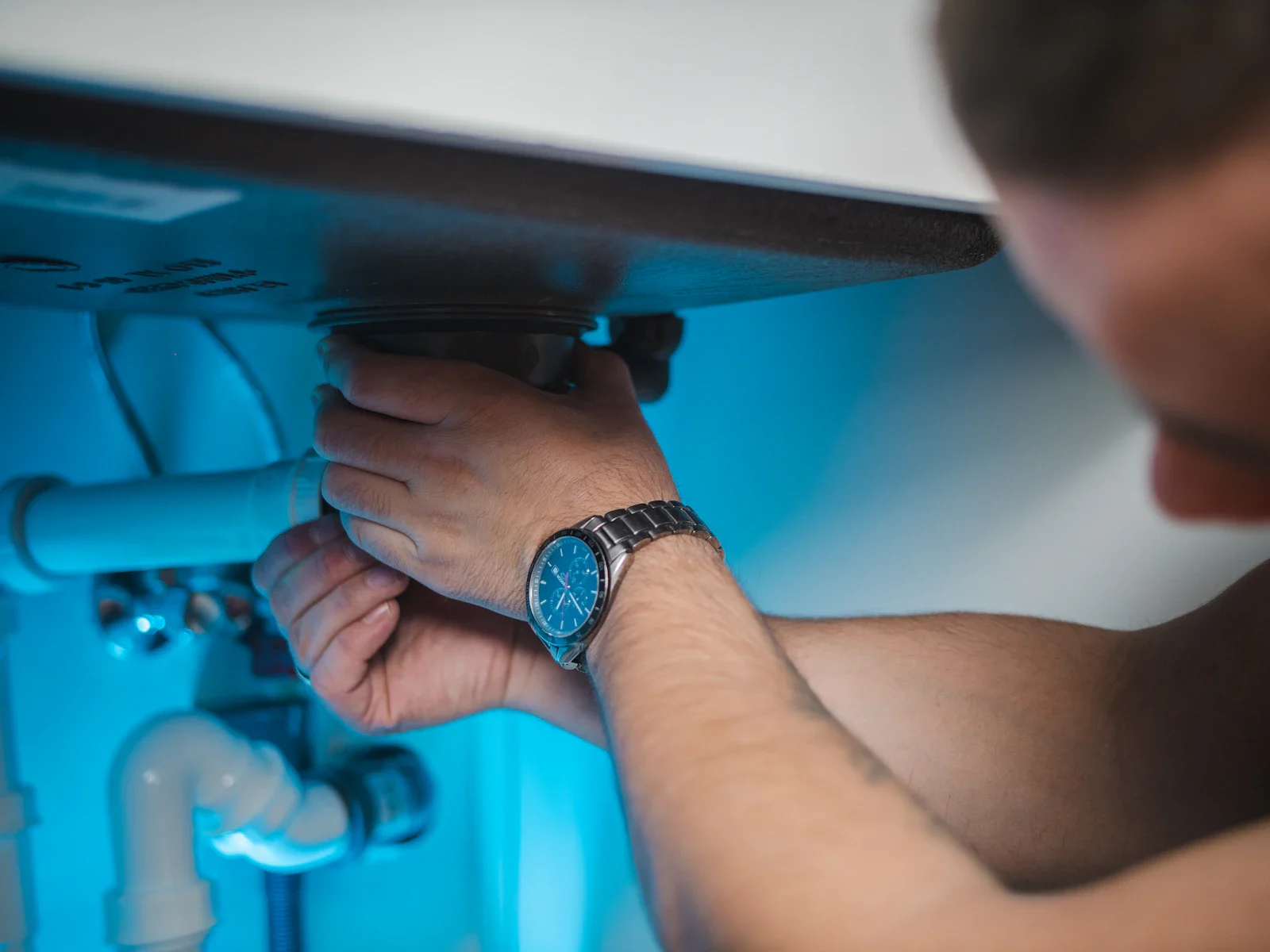
Water from under a sink can soak into the cabinet base, the subfloor, nearby flooring and even the wall behind it. If you are dealing with under-sink leak water damage in Rockwall, TX, call our free referral line to reach an independent local water damage restoration provider.
Call (972) 000-0000Signs of an under-sink leak
- A cabinet floor that is warped, swollen, stained or soft
- Puddles, drips or water marks on items stored under the sink
- A musty or sour smell when you open the cabinet
- Loose or lifting flooring in front of the sink or dishwasher
- Mold spots on the cabinet walls or back panel
- Drips from shut-off valves, braided supply lines or the drain trap
- A garbage disposal that leaks from the bottom or sides
Why under-sink leaks happen in Rockwall homes
Supply lines and shut-off valves under sinks wear out over time, especially plastic-nut connectors and older rubber lines. Drain slip nuts can loosen when someone bumps them while putting things away. Dishwasher and disposal connections add more joints that can drip.
Hard water is common in many North Texas homes, and mineral buildup on valves and fittings can make them more likely to seep. Because cabinets stay closed most of the time, a slow leak can run for weeks. That matters for insurance: many policies cover sudden and accidental damage, but damage from slow leaks that went on over time is often excluded.
What a water damage pro does
Under-sink leaks often look small but spread under cabinets and flooring. A water damage restoration provider will usually:
- Check the cabinet base, subfloor, nearby flooring and the wall behind the sink with moisture meters
- Remove the toe kick or cabinet bottom when needed to reach trapped water
- Dry the cabinet, subfloor and wall cavity with air movers and dehumidifiers
- Remove swollen particleboard or flooring that can’t be saved
- Look for mold and explain how it should be handled
- Document the damage for your insurance company
A plumber can replace the leaking supply line, valve, drain or disposal. Ask the provider about pricing and what can be saved before work starts.
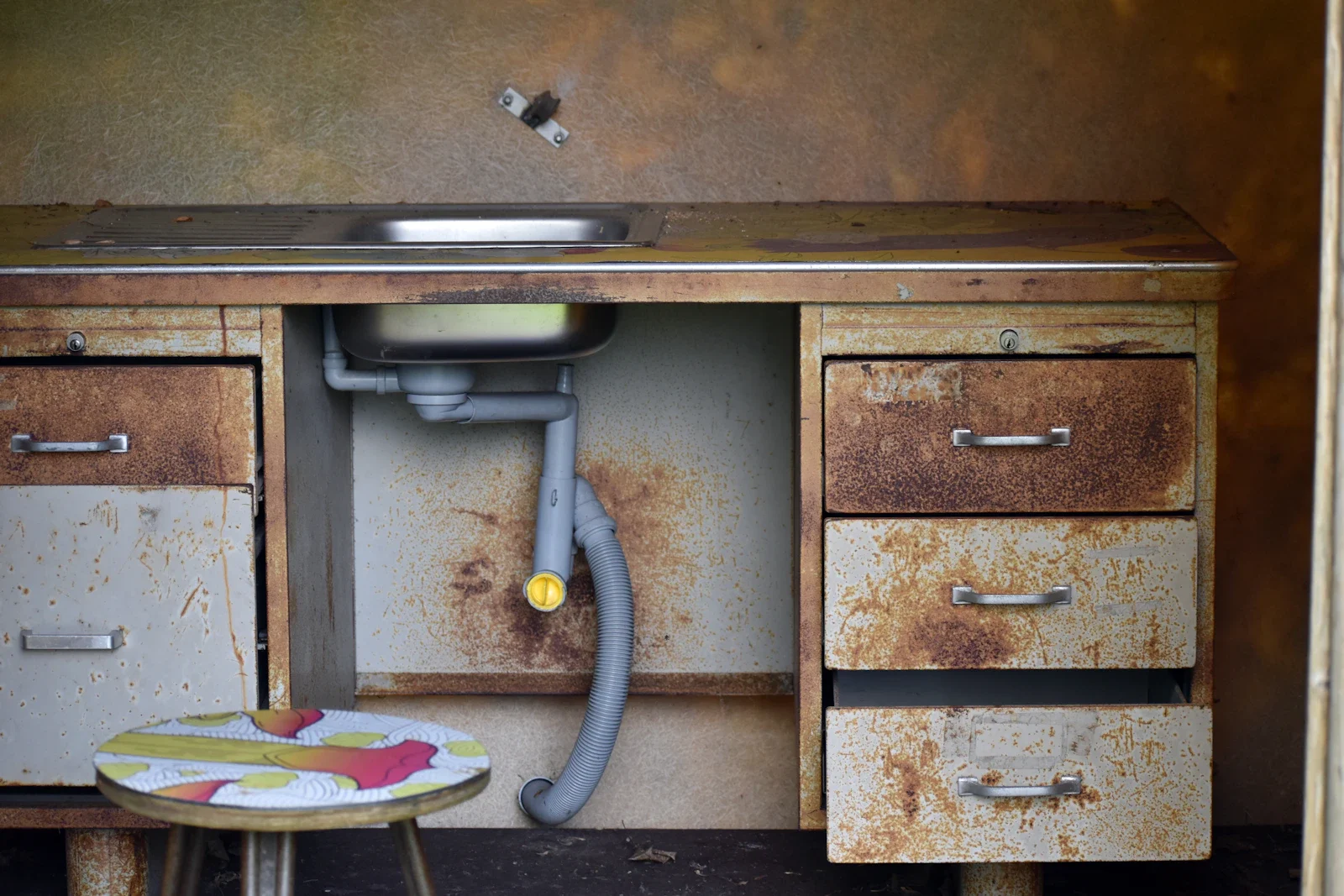
What to do right now
- Close the shut-off valves under the sink. If they leak or won’t turn, shut off the main water.
- Empty the cabinet and set everything somewhere dry.
- Wipe up standing water and leave the cabinet doors open.
- Check the floor in front of the cabinet and the dishwasher for soft spots.
- Take photos of the leak, the cabinet floor and any stains.
- Call our referral line to reach a local restoration provider.
Even a small, hidden leak can lead to mold when materials stay wet for more than 24 to 48 hours.
Related: wall leak water damage, water damage cost factors and insurance basics and the FAQ.