A brown ring on the ceiling, a bulge in the drywall or a steady drip from a light fixture usually means water is coming from somewhere above. In a two-story home, it may be a supply line, drain or toilet upstairs. In a one-story home, it is often a pipe, water heater or AC drain line in the attic.
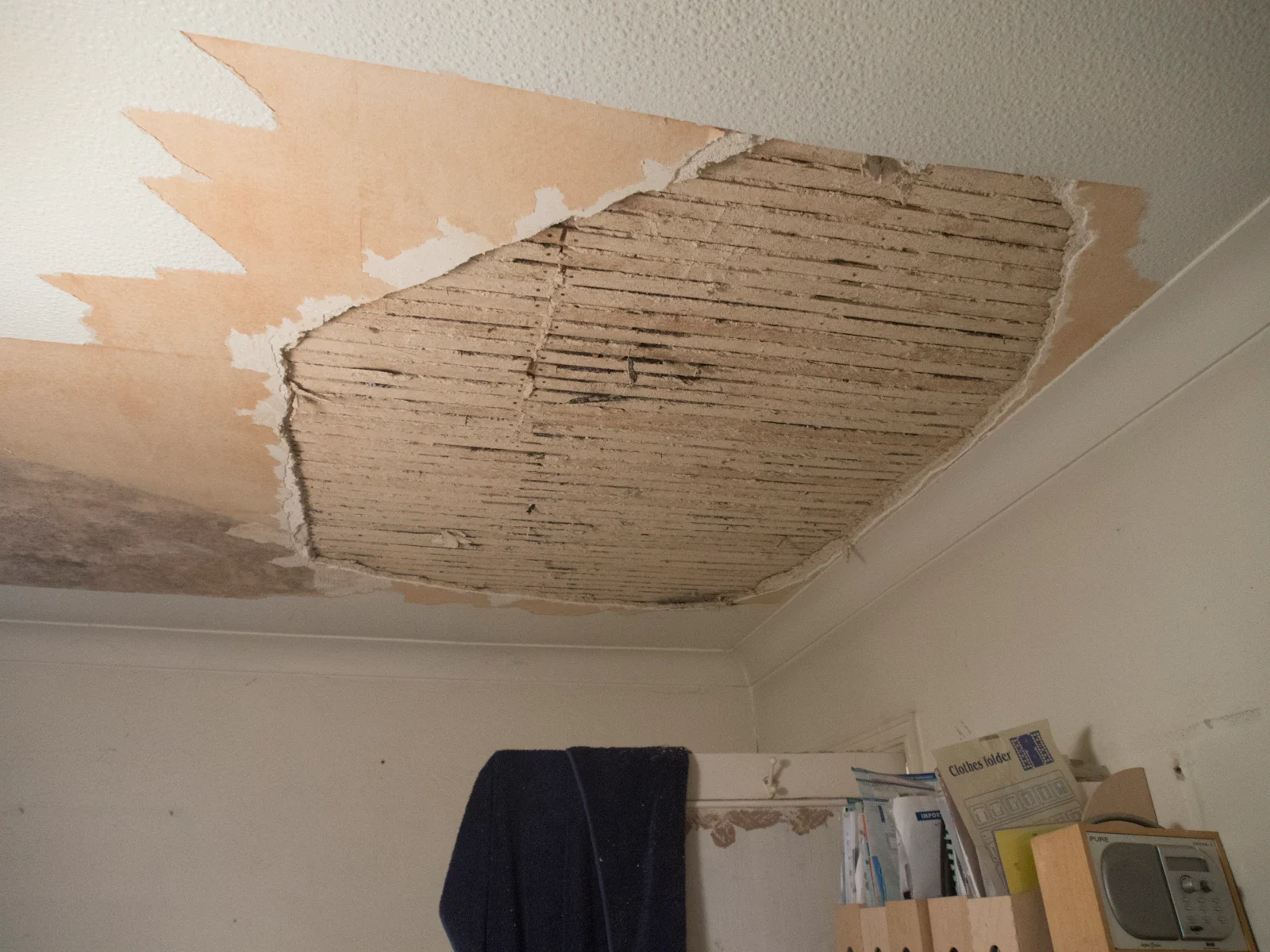
Ceiling leaks get worse fast because water collects on top of the drywall until it sags or gives way. If you are dealing with ceiling leak water damage in Rockwall, TX, call our free referral line to reach an independent local water damage restoration provider.
Call (972) 000-0000Signs of a ceiling leak
- Yellow or brown stains, often with a darker ring around the edge
- Bubbling or peeling paint and soft spots in the drywall
- A sagging or bulging section of ceiling
- Drips from light fixtures, vents or a smoke detector
- Water spots that grow after someone showers upstairs
- A musty smell in an upstairs bathroom or the room below it
- Damp attic insulation around pipes, the water heater or the AC unit
Why ceiling leaks happen in Rockwall homes
Many North Texas homes have plumbing, water heaters and air handlers in the attic, where summer heat is hard on fittings and plastic parts. AC condensate lines can clog with algae during the hot months and overflow into the ceiling. Supply lines to upstairs toilets and sinks can loosen or crack over time, and shower pans and tub drains can slowly seep into the ceiling below.
Freezes are rare in Rockwall, but when they hit, pipes in attics and exterior walls are the most exposed. During the February 2021 winter storm, many homeowners found split pipes only when the ice thawed and water started coming through the ceiling.
What a water damage pro does
A water damage restoration provider focuses on the water already in your ceiling, walls and floors. They will usually:
- Check the ceiling, walls, insulation and the floor below with moisture meters
- Safely release water trapped above sagging drywall
- Remove ceiling drywall and insulation that can’t be dried in place
- Dry the ceiling cavity, framing and the room below with air movers and dehumidifiers
- Protect flooring and furniture from more water
- Document the damage with photos and moisture readings for your insurance claim
The pipe, drain or appliance that caused the leak will usually need a plumber or HVAC technician. Ask the provider how they coordinate with those trades, and confirm pricing before work begins.
What to do right now
- Turn off the water at the main valve, or at the fixture valve if you know the source.
- If water is near a light fixture, switch off that circuit at the breaker if you can reach it safely.
- Put buckets and towels under the drip and move furniture and electronics away.
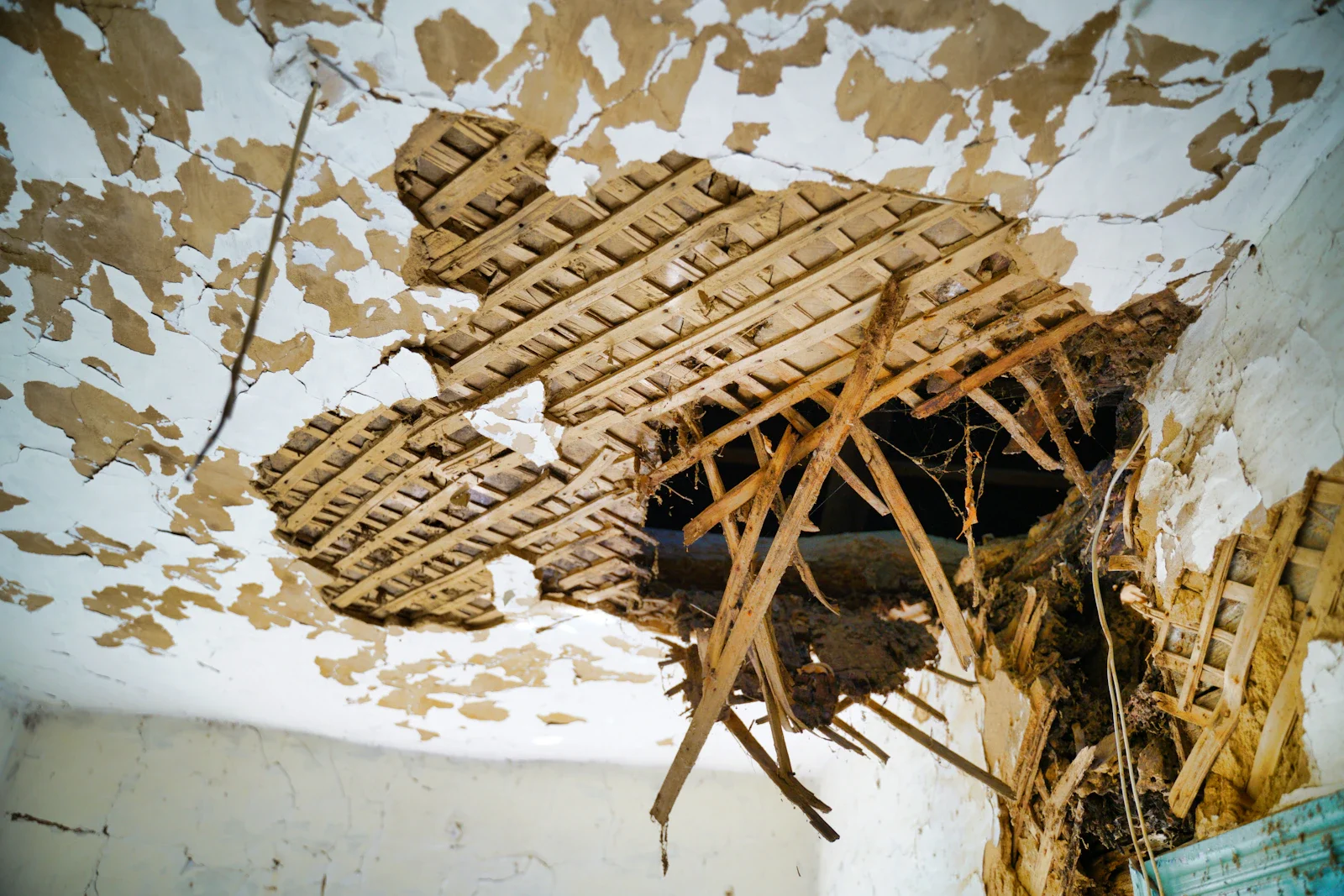
- Stay out from under a sagging ceiling. It can come down without warning.
- Take photos and video of the ceiling, the drip and any wet floors.
- Call your insurance company and our referral line.
Mold can start when ceiling drywall and insulation stay wet for more than 24 to 48 hours, so don’t wait for a stain to “dry on its own.”
Related: water heater leak water damage, burst pipe water damage and what to do right after a leak.